Orvia
A design, software, and AI studio in Vancouver
Kestrel
Site for a personal crypto market-making system: a live order book in the hero, and a manifesto that says backtests lie.
- Scope
- Product, engineering & site
- Year
- 2026
Context
Kestrel is a personal high-frequency market-making system for crypto, built on a deterministic trading engine. It quotes both sides of the book, earns the spread, and manages the inventory that comes with it. The reference is Jane Street, and the point taken from it is that the edge is pricing and inventory risk, not latency. It stays backtest and testnet only until the numbers earn real capital.
What we built
The engine and everything around it: verified level-2 replay, deterministic backtests, markout metrics, an inventory-skewed quoter, a read-only API and dashboard over the run store, and this public site. The site's job is to explain a system with nothing to sell, honestly, to people who would know if it were bluffing.
The hero is the product
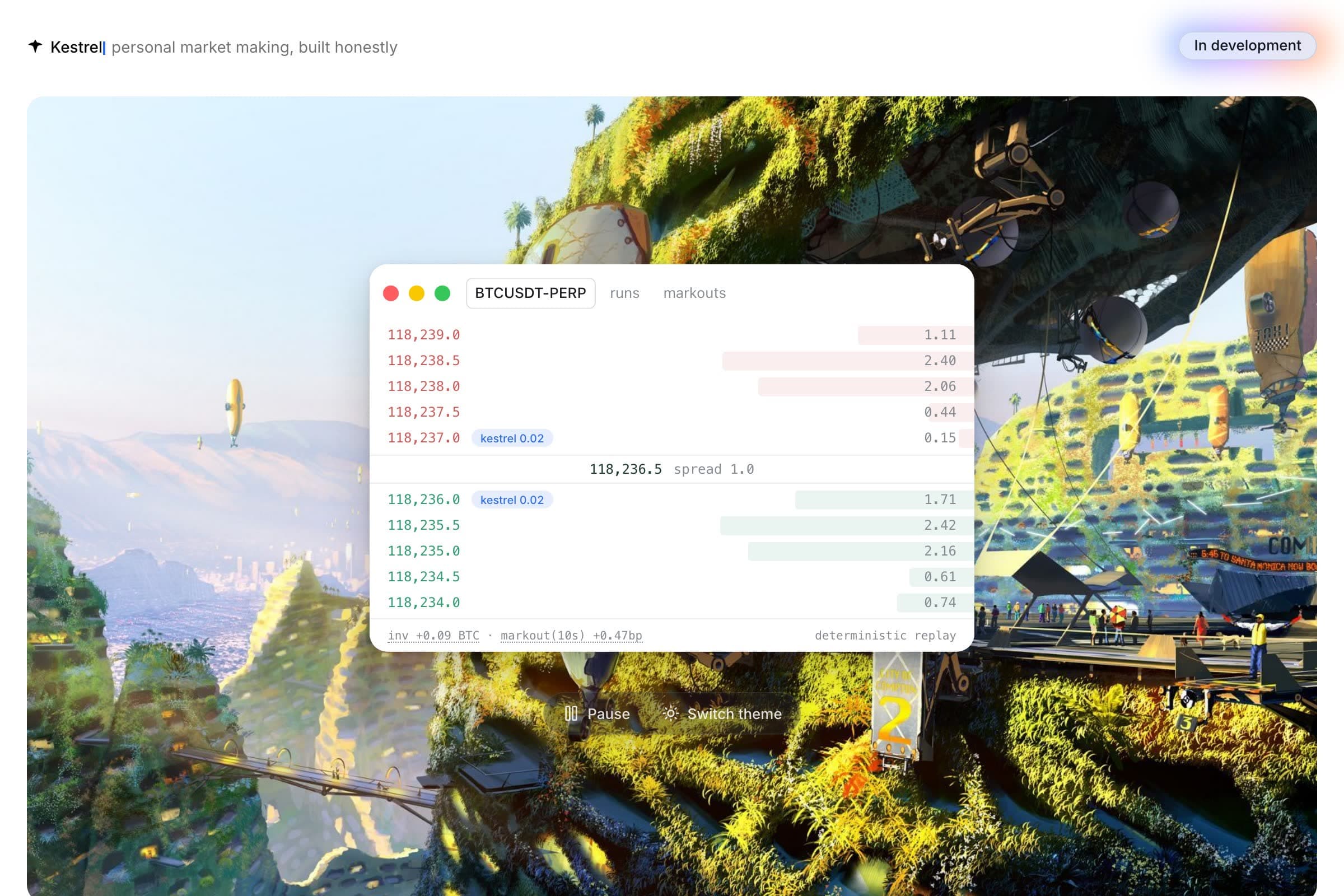
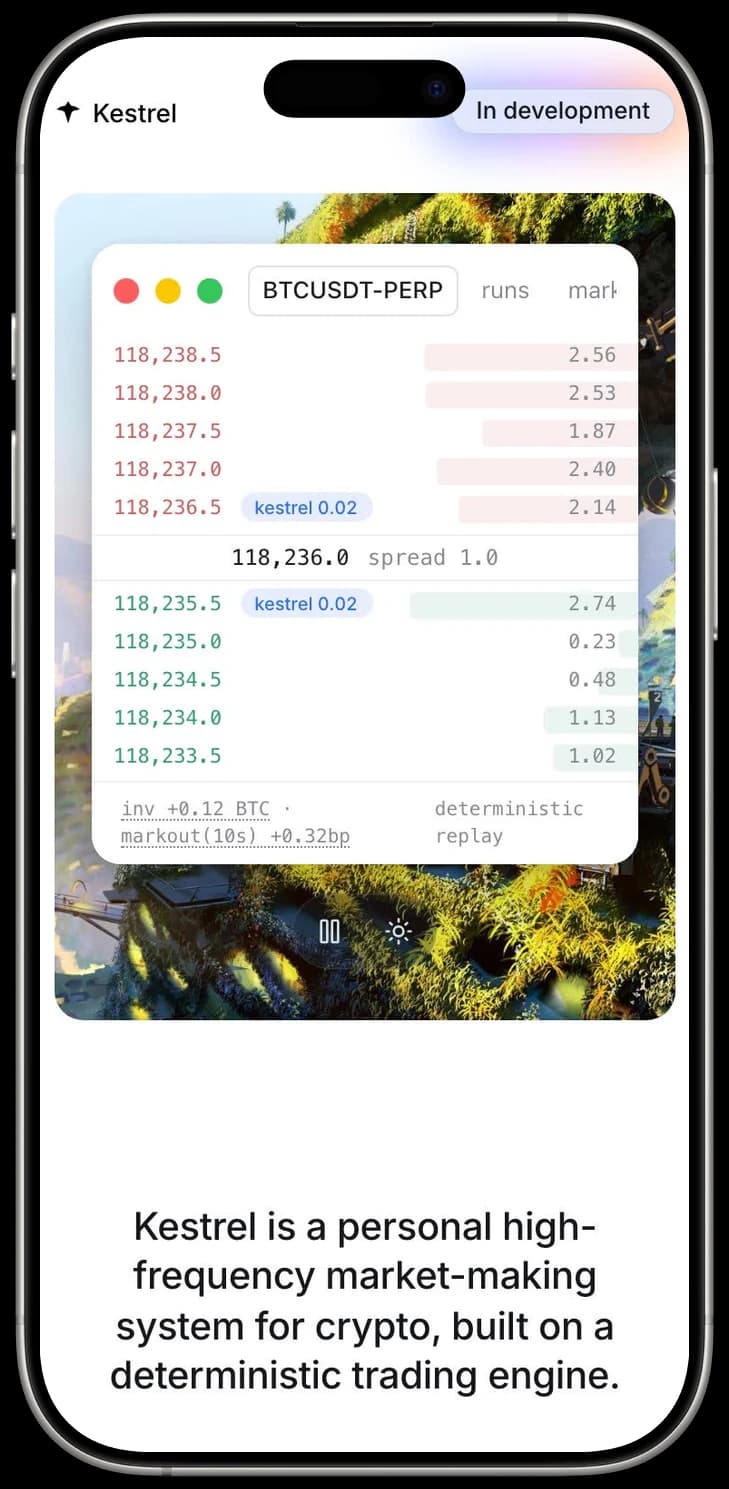
The stage opens fullscreen and shrinks into its slot as you scroll. Inside it a simulated BTCUSDT-PERP book ticks with Kestrel's own quotes resting on both sides, the spread, the inventory, and a ten-second markout underneath. Pause it, switch the theme, and the same city turns to night.
Six claims, one line each
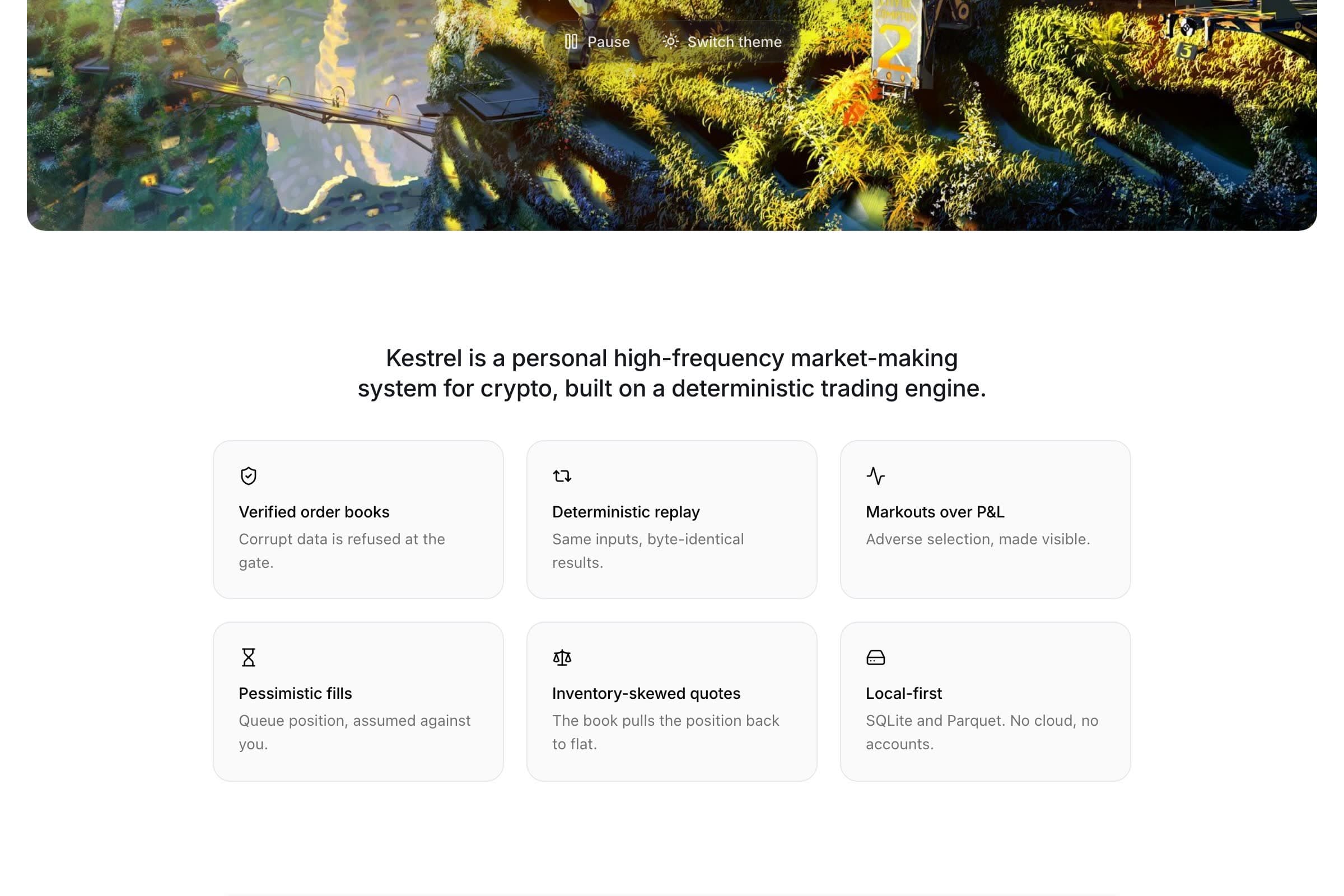
Verified order books. Deterministic replay. Markouts over P&L. Pessimistic fills. Inventory-skewed quotes. Local-first. Each gets a sentence, not a paragraph, because each one is a milestone the engine has actually shipped.
A manifesto instead of pricing
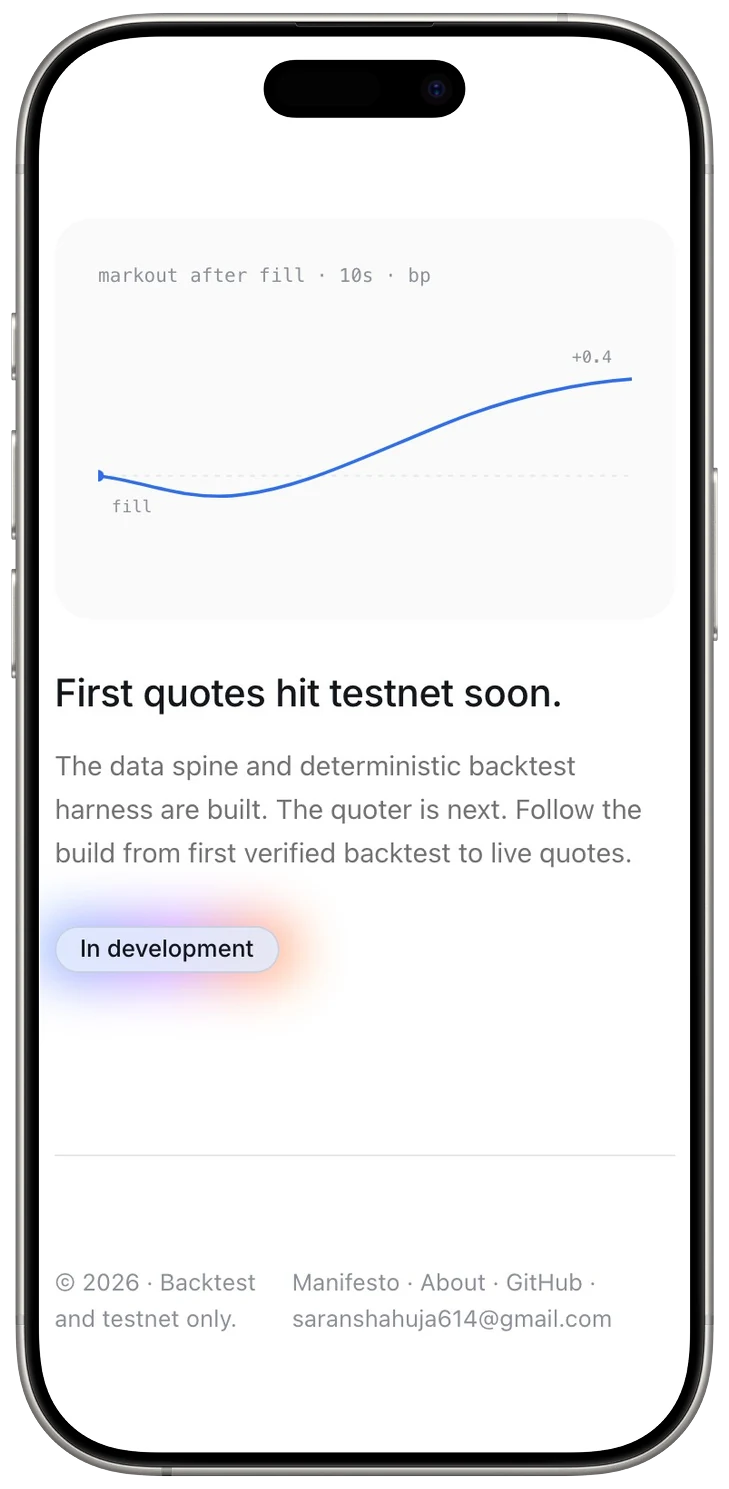
There is nothing to buy, so the site argues instead. An edge is priced, not raced. Backtests lie. Determinism, or it doesn't count. Verification first, strategy last. An About page tells the build in order, data spine before strategy, and ends with the one line that matters: first quotes hit testnet soon.
Under the hood
The site is Vite, React, and TypeScript, with a liquid-glass treatment over day and night wallpapers. The engine is Python on Nautilus Trader, with SQLite and Parquet on disk and a FastAPI read layer.
Building something like this?
Start a project