Orvia
A digital design and development studio in Vancouver
Nyxis AI
AI-assisted ticketing for cities and campuses, live with early partners.
- Scope
- Product, design & site
- Year
- 2026
- Live
- nyxis.ca
Context
Public-sector teams are drowning in inbound: tickets, requests, citizen messages, internal escalations, all aging in queues built for a different decade. Nyxis AI is the answer for cities, campuses, and facilities: an AI-assisted ticketing system that converts unstructured signals, texts, photos, forms, emails, and API calls, into structured, trackable tickets with routing, ownership, and resolution. The site says it in one line: the future of cities runs on AI.
What we built
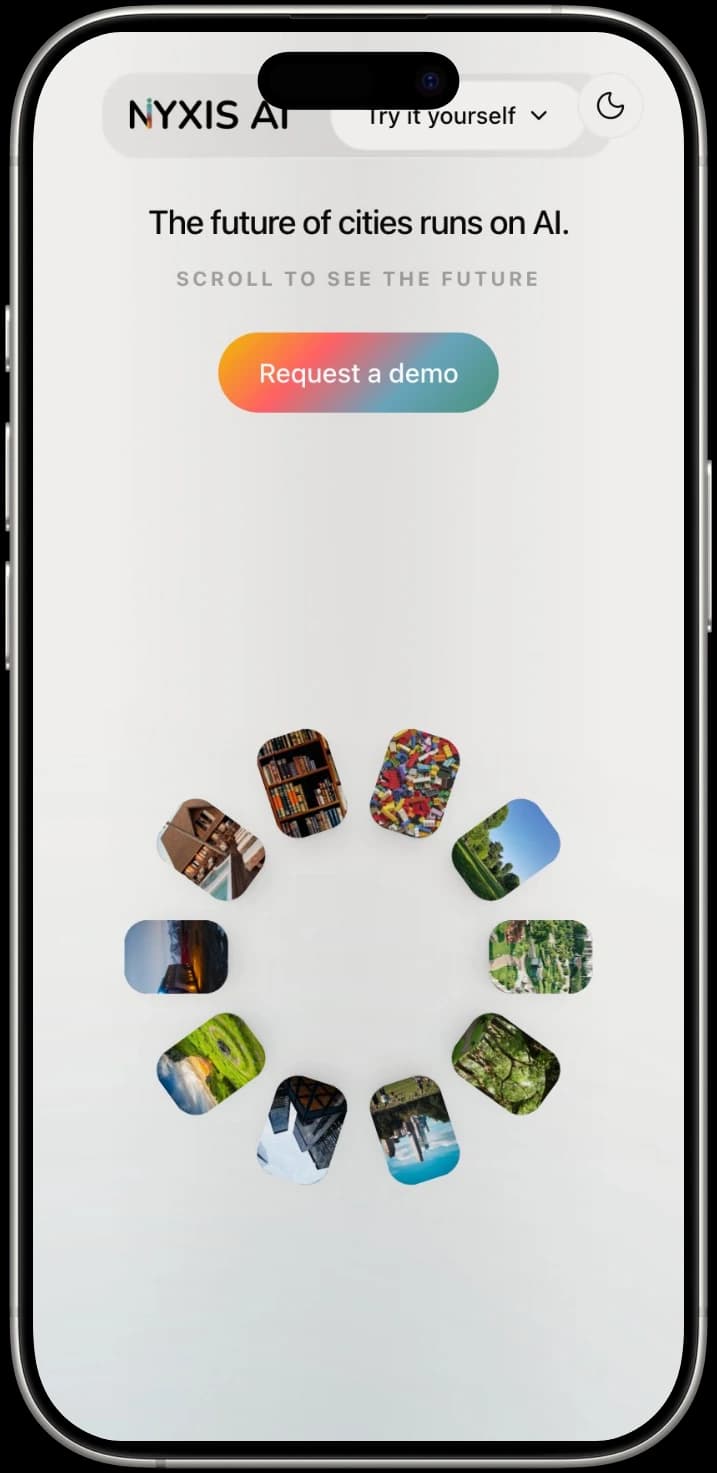
The product and its public face: intake, triage, prioritization, and assisted response across the queues these teams already run, plus the marketing site that explains it. The site opens on a ring of city photographs that morphs as you scroll, then walks the whole pipeline: signal to structure to action. Deployment specifics are under NDA; Nyxis is live with early partners.
Report it like a text
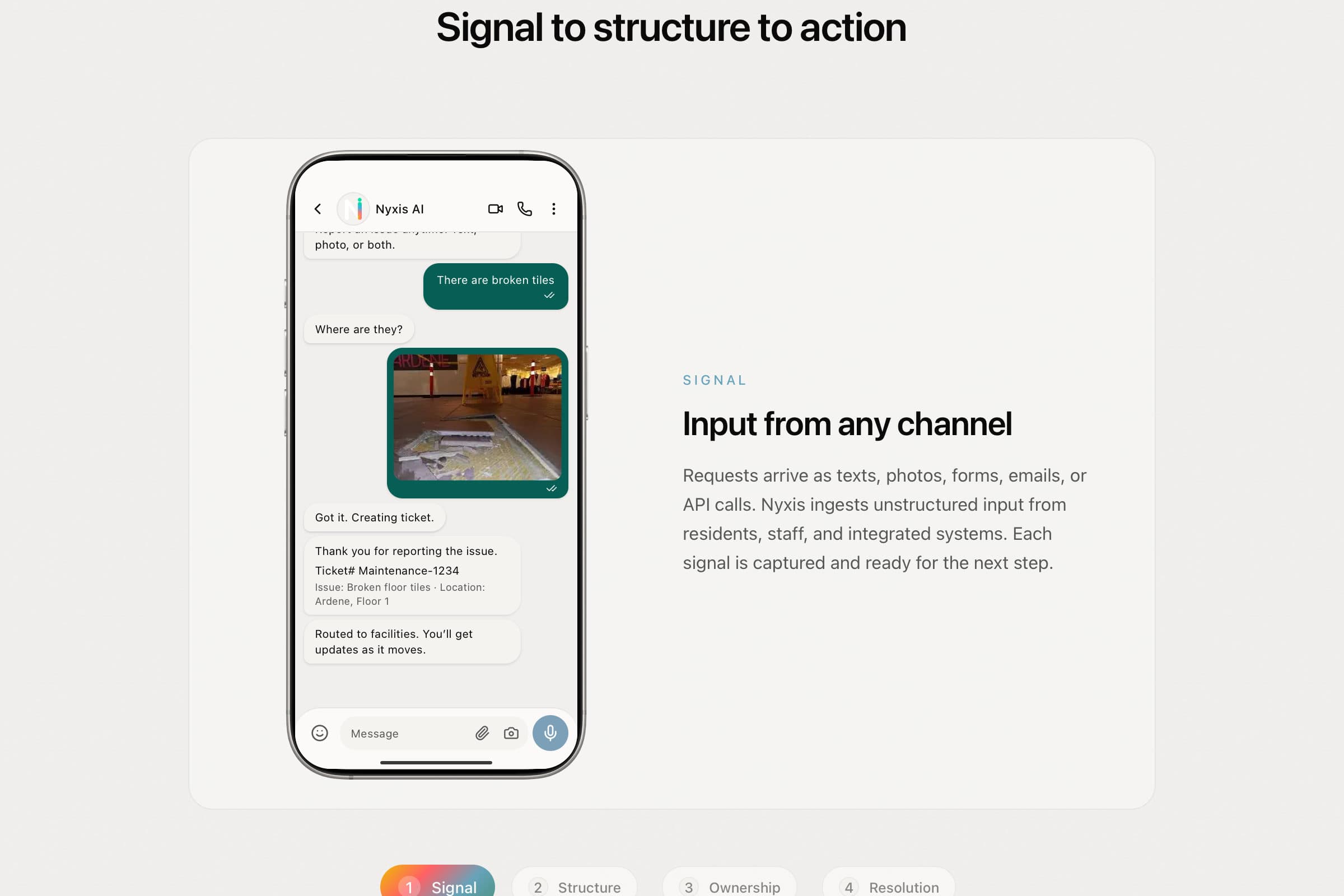
The demo carries the pitch: a resident texts 'There are broken tiles', attaches a photo, and Nyxis answers with a ticket, category, priority, location, routed to facilities, with updates as it moves. Four steps sit under everything: Signal (input from any channel), Structure (AI classification with a human reviewing before routing), Ownership (assignment and tracking), Resolution (status, notifications, and the full audit trail).
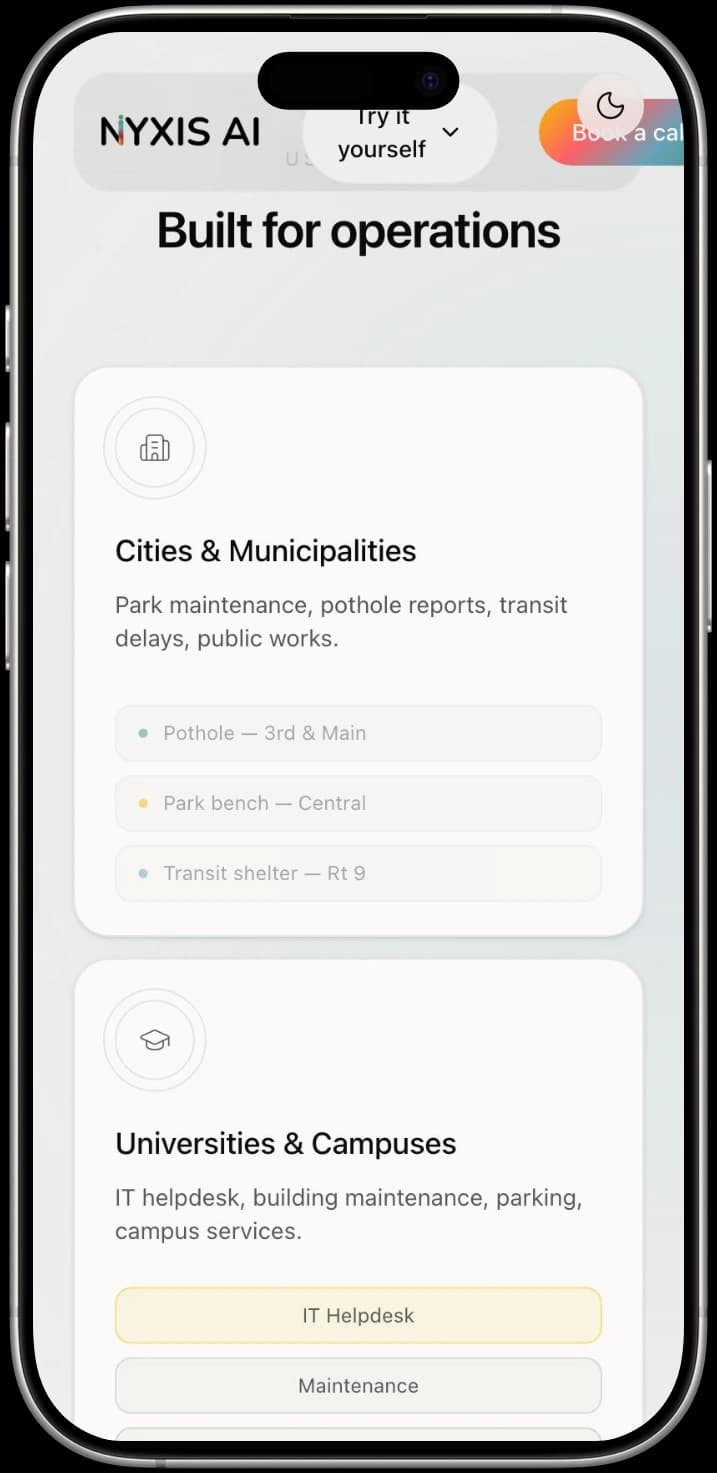
Built for operations
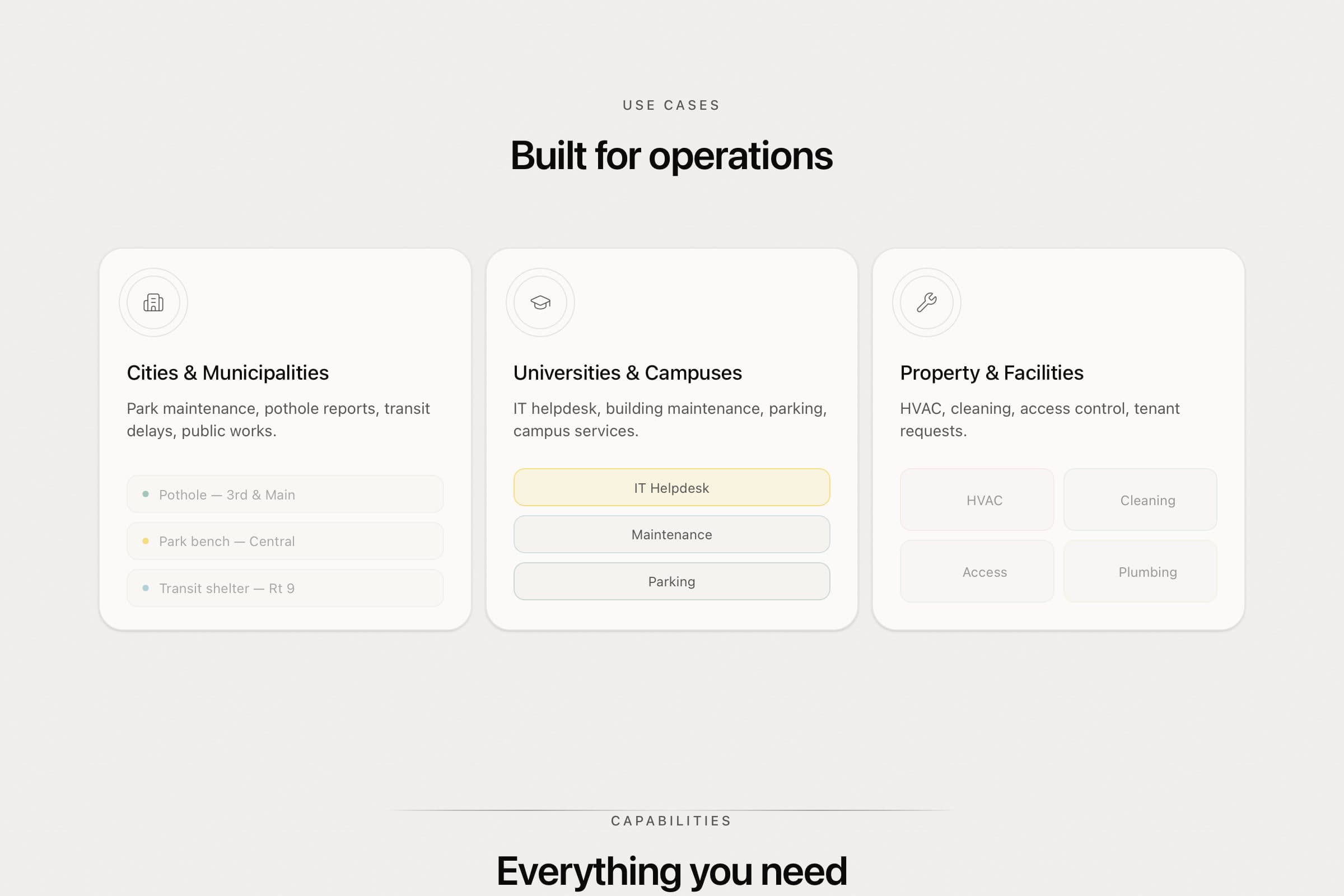
Three rooms, one product: cities and municipalities (potholes, park maintenance, transit delays, public works), universities and campuses (IT helpdesk, building maintenance, parking), and property and facilities (HVAC, cleaning, access control, tenant requests).
Built on trust
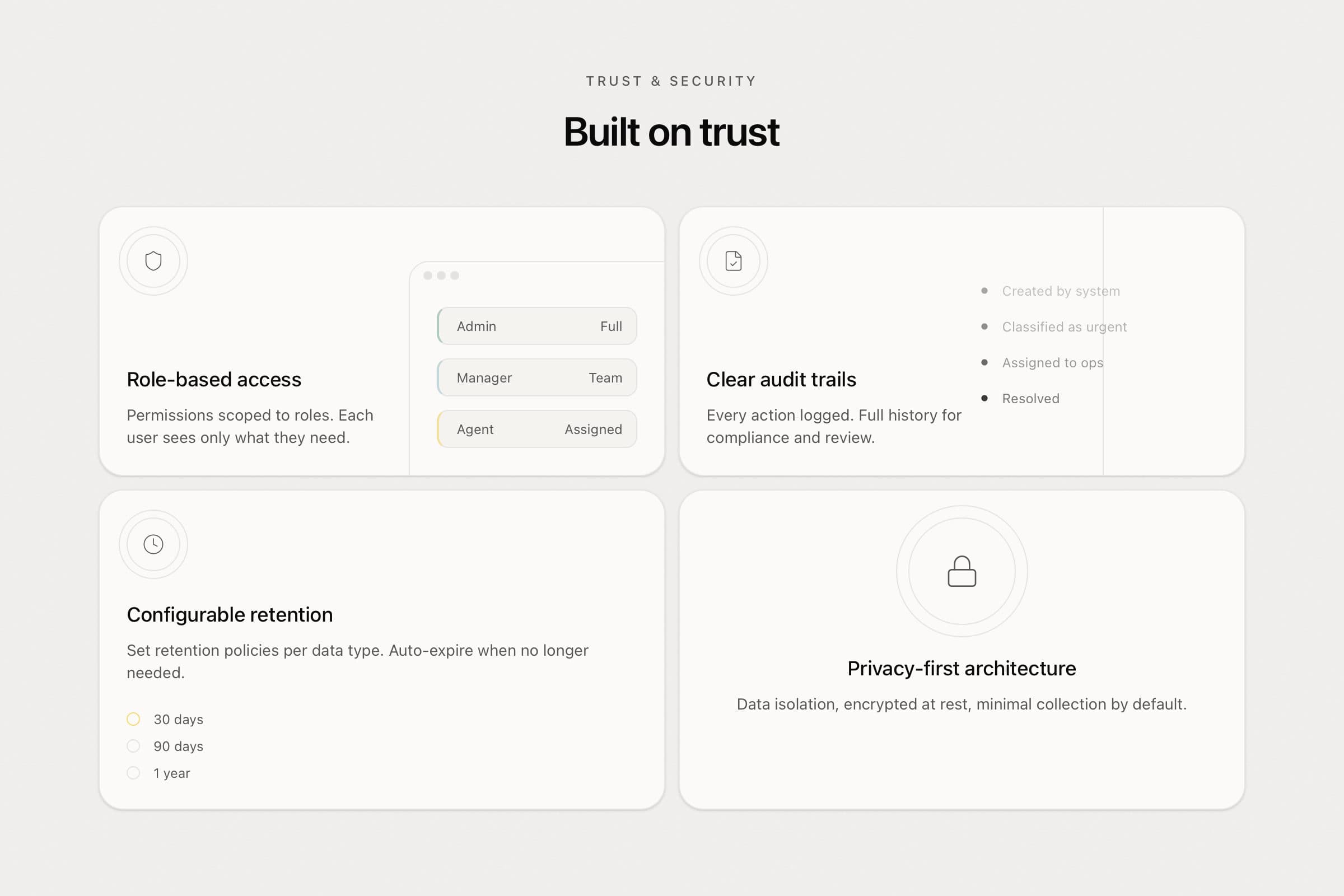
Generic AI tools weren't built for the constraints these teams live with, so Nyxis leads with them: role-based access, clear audit trails with every action logged, configurable retention per data type, and a privacy-first architecture, data isolation, encrypted at rest, minimal collection by default.
Under the hood
Next.js, React, TypeScript, and Tailwind, with Framer Motion driving the scroll-tied animation. Supabase and Anthropic models underneath.
Building something like this?
Start a project