Orvia
A digital design and development studio in Vancouver
A button is a promise
2 min read
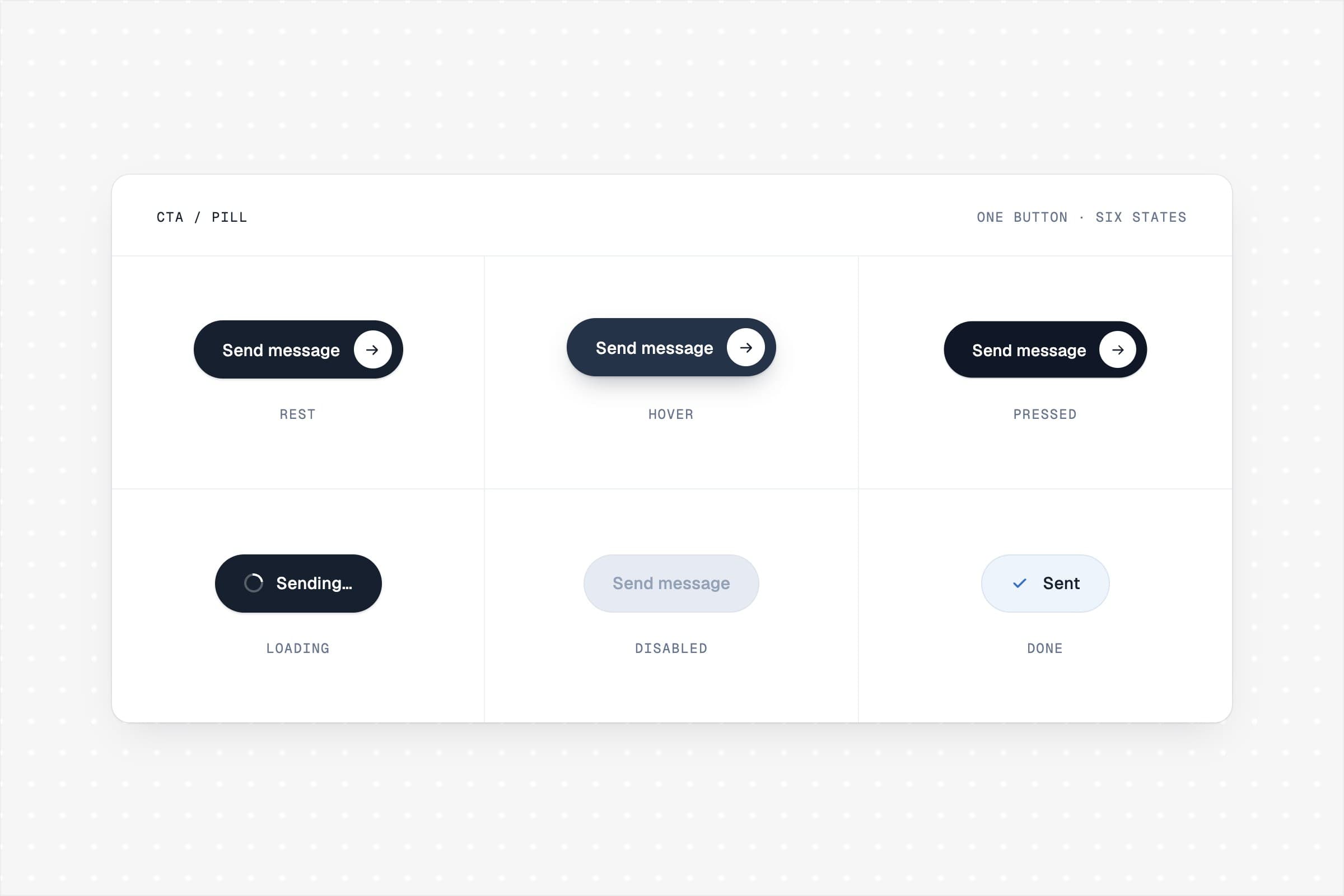
Nobody ever compliments a good button. People only notice the bad ones: the button that did nothing when they tapped it, the one that charged their card twice because it never said it heard them the first time. The button is where an interface stops being a picture and starts being a machine, and it is where trust is quietly won or lost.
The first thing a good button does is answer immediately. Research on human perception puts the threshold around a hundred milliseconds: respond faster than that and the button feels like a physical object, respond slower and it feels like a request that went somewhere far away. This is why we give buttons a visible press, a slight compression the instant your finger lands. Your brain reads it the way it reads a light switch clicking.
The second thing to know is that a button is not one design, it is seven. Resting, hovered, focused, pressed, loading, disabled, and done. Most websites ship the first one and improvise the rest. The loading state alone prevents the double-charge story above: the moment a payment button is pressed, it should lock, say so, and show that work is happening. A button that stays pressable while the money moves is a small lie.
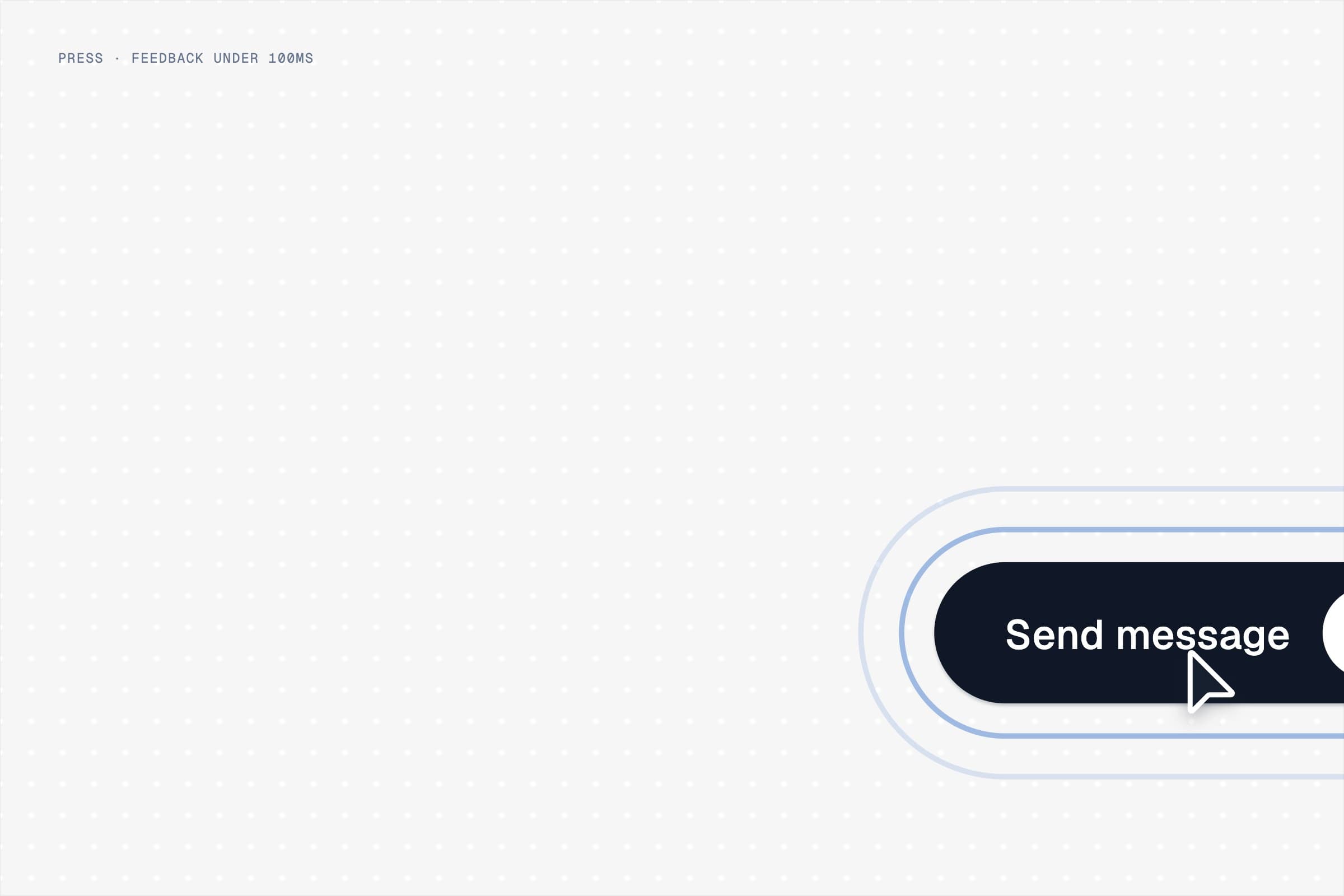
The label matters more than the styling. A button is a promise about what happens next, so the words on it should name the consequence: 'Send message', 'Start my trial', 'Delete forever'. The word 'Submit' promises nothing, which is why it feels bureaucratic. If you cannot write a clear label, that is rarely a writing problem; it usually means the action itself is muddy.
Size is the last quiet kindness. A fingertip is about ten millimetres across, which is why platform guidelines converge on touch targets of roughly forty-four pixels. Generous targets forgive imprecision: a bus passenger, a parent holding a child, anyone tapping with a thumb while walking. Precision is a thing designers have on a desktop monitor and users mostly do not have anywhere else.
We spend what most people would consider an unreasonable amount of time on buttons. But the whole relationship between a person and a product runs through them, a few milliseconds at a time, and milliseconds are where trust actually lives.