Orvia
A digital design and development studio in Vancouver
Fast is a feeling
2 min read
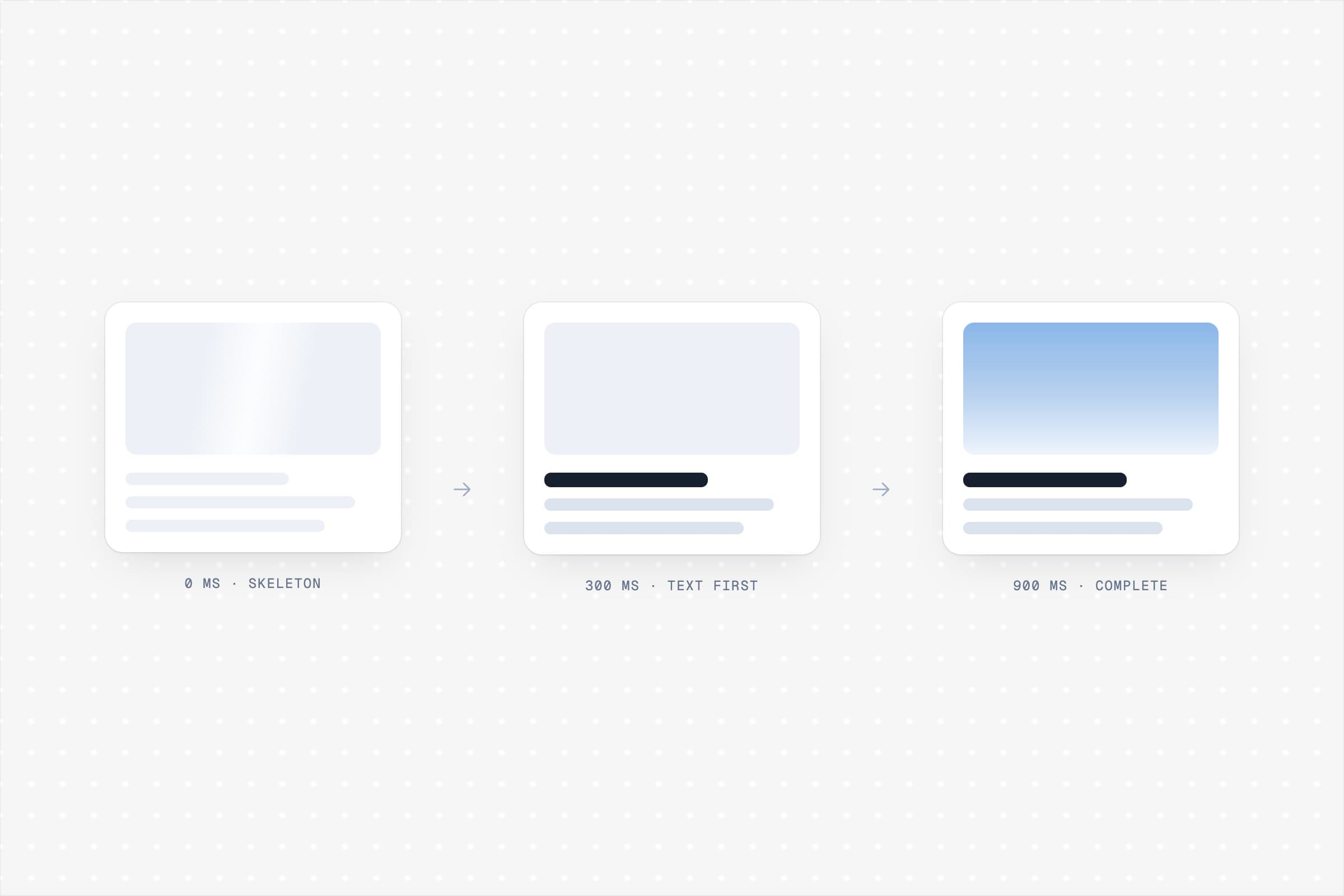
Before anyone judges your design, your copy, or your product, they judge your speed. A page that hesitates feels broken, and broken feels untrustworthy; the visitor draws conclusions about your whole operation from the first half-second. This sounds unfair until you notice you do it too.
The numbers are less forgiving than intuition suggests. Delays around one hundred milliseconds already register as hesitation. By one second, attention starts drifting to something else. By three, a meaningful share of visitors on a phone have simply left, and they do not file a complaint on the way out. Slowness is the one design flaw that removes its own witnesses.
Here is the part most people never hear: perceived speed and measured speed are different things, and perception is the one that pays. A page that shows its structure instantly, real text, the shape of what is coming, feels faster than one that shows a blank screen and then arrives all at once, even when the second one technically finishes first. Spinners make waiting the main event. Showing something honest immediately makes the wait disappear.
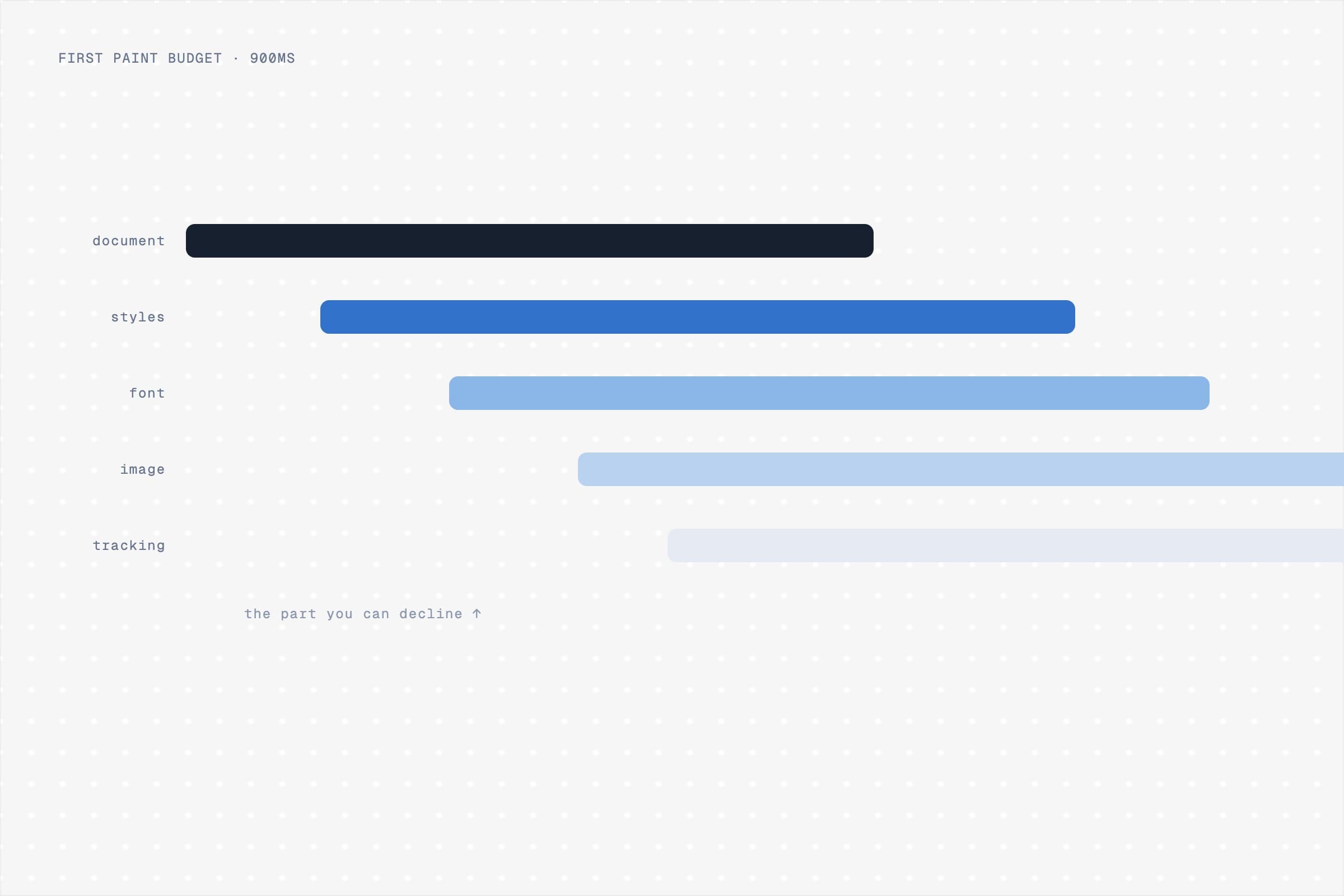
Actual speed still has to be earned underneath, and it is mostly earned by refusal. Every tracking script, every font weight, every autoplaying video is borrowed against the visitor's patience. Most slow websites are not slow because of hard engineering problems; they are slow because nobody was in charge of saying no. A performance budget is less a technical document than a list of things you declined.
The discipline that keeps it honest: test on the network your visitors actually have. A site that feels instant on a designer's laptop on office fibre can be a ten-second ordeal on a mid-range phone on a bus. That phone is not the edge case. For most local businesses, it is the median customer.
Fast is a feature people feel before they can name it, and it compounds: every interaction on a fast site deposits a little trust. We treat speed as part of the design, not a cleanup task at the end, because by the end it is too late.